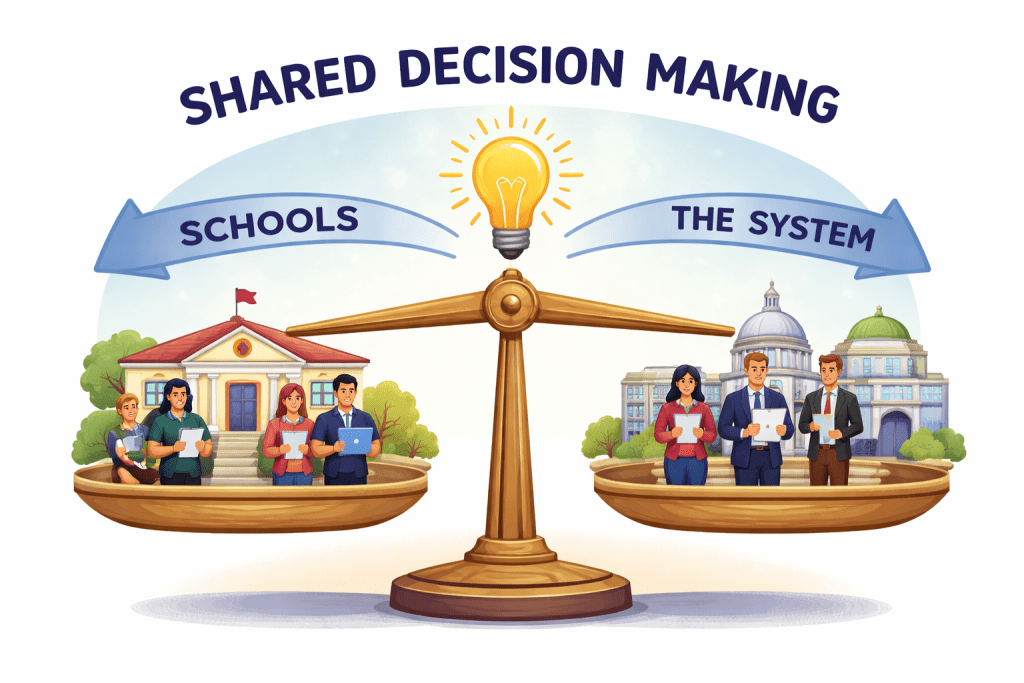
The concept of curriculum encompasses a dynamic interplay between a national framework that sets overarching goals and standards and a localized approach that allows for adaptation to diverse contexts, emphasizing the collaborative co-construction of learning experiences by both educators and students to ensure relevance, engagement, and meaningful learning outcomes.

Curriculum is often misunderstood as a rigid set of topics to be taught, but in reality, it serves as a flexible framework guiding the design of learning experiences. We must reimagine curriculum as a dynamic framework that inspires meaningful learning experiences, empowers learners, and prepares them to thrive in an ever-changing global landscape.
At FutureMakers we address the following in our approach to curriculum design and implementation:
1. Holistic Approach to Curriculum Design:
- Emphasising that curriculum should address both academic subjects and the development of competencies and learner qualities.
- Highlight the importance of balancing knowledge acquisition with skill development and fostering personal attributes such as critical thinking, creativity, and adaptability.
- Acknowledging the need to tailor the experience of curriculum to the needs, interests and abilities of individual learners.
2. National Curriculum as a Framework for Local Implementation:
- Acknowledging the role of a national curriculum in ensuring coherence across the country.
- Advocate for localised implementation to tailor the curriculum to the needs, resources, and cultural context of each community.
- Stress the importance of authenticity and relevance, drawing on local resources, context and expertise to make learning meaningful for learners.
3. Focus on Pedagogical Approaches and Inclusivity:
- Emphasising that curriculum should not only prescribe what to teach but also how learning should occur.
- Highlighting the importance of inclusive pedagogical approaches that address cultural differences and diverse learning needs.
- Advocating for a variety of teaching methods that promote active learning, collaboration, and student engagement.
4. Expansion of Understanding: From Local to Global:
- Promoting a curriculum that expands learners’ understanding from local to global perspectives.
- Emphasising a future-focused approach that promotes engagement in social action where appropriate, preparing learners to navigate global challenges and contribute positively to society.
Project Ideas and Links
- Check out our list of resources and links to support your planning around the UN’s Sustainable Development Goals (SDGs) – lots of ideas here that can easily be integrated into your curriculum planning.
- See also our list of links to project ideas and links for teachers, providing lots of future-focused ideas for designing programmes with a social purpose to help students apply academic concepts to real-world challenges and work to create solutions.