

Mobile Devices for Learning
Following on from my previous post about Systems Thinking and School lunches, a second example we could use to illustrate systems thinking is the provision of mobile devices for learning. We saw during COVID an acceleration of interest in providing students with digital devices as a means of enabling access to their learning. Of course, the provision of mobile devices for students was a focus in many schools well before COVID came along, with BYOD initiatives becoming popular. There’s quite a history here. What began with laptops became ipods, then ipads and then chrome books and so on.
Many claims have been made about why we should be promoting the use of digital devices in our schools. In many countries (not NZ) governments have take responsibility for equipping schools with devices for students on a massive scale, reflecting the belief that there is something positive to be gained from doing so. Nowadays, of course, an increasing number of learners are coming to school with a personally-owned device, although currently these are banned from being used during school time. So how do we navigate our way through all of this?
Consider the up-sides
As we consider the reasons that schools may choose to do this there are a number of possibilities – including some or a combination of the following:
- Enhanced Learning Opportunities: Many schools choose to use digital devices to offer more personalised, interactive, and engaging learning experiences. Digital devices allow access to a wide range of resources, tools, and platforms that can support diverse learning styles and needs.
- Digital Literacy and 21st-Century Skills: As digital technologies increasingly shape the workforce, schools are focusing on equipping students with the skills needed to succeed in a technology-driven world. This includes critical thinking, problem-solving, communication, collaboration, and information literacy.
- Equity and Access: Providing devices ensures that all students, regardless of their socioeconomic background, have equal access to digital learning tools and online educational content and resources. This helps bridge the digital divide, ensuring that students from disadvantaged backgrounds are not left behind.
- Collaboration and Communication: Digital devices can foster collaboration between students, both within the classroom and beyond. They also enable better communication between students, teachers, and parents through learning management systems (LMS), online forums, and real-time feedback mechanisms.
- Preparation for Remote or Blended Learning: The COVID-19 pandemic highlighted the need for schools to be prepared for remote or blended learning environments. The provision of digital devices was a crucial part of this response, ensuring continuity of education in the face of disruptions like lockdowns or natural disasters.
- Cost Efficiency and Flexibility: Digital resources can sometimes reduce the need for traditional textbooks and paper materials, potentially lowering costs over time. Additionally, digital devices offer flexibility in accessing updated educational content as well as expanding access to available online content, making it easier for schools to keep up with new curricula and trends.
- Data-Driven Education: Schools are increasingly using data analytics to track student progress and personalise learning. Digital devices allow for the collection of real-time data on student performance, helping teachers to tailor instruction and provide timely interventions where needed. This also creates new opportunities for real-time reporting to teachers and parents.
And the down-sides…
While providing digital devices to students offers numerous benefits, there are several arguments and concerns that educators, parents, and policymakers may raise against their widespread implementation in schools. Here are some of the arguments made against providing digital devices for learners in school:
- Initial and Ongoing Expenses: Purchasing devices for every student requires significant upfront investment. Additionally, costs for maintenance, repairs, software licenses, and regular upgrades can strain school budgets.
- Distraction from Learning: Digital devices, especially if not properly managed, can become a source of distraction for students. With access to games, social media, and other non-educational apps, students may struggle to concentrate on their academic work. In addition, the constant temptation to switch between apps or activities can hinder deep thinking and engagement with learning material.
- Dependency on Technology: Some educators argue that an overemphasis on digital learning can come at the expense of fundamental skills like handwriting, mental math, and critical thinking, which may not be developed as robustly when students rely on devices. Plus, prolonged use of digital devices can reduce opportunities for students to engage in meaningful face-to-face interactions with their peers and teachers.
- Equity and accessibility issues still persist: Even with school-provided devices, disparities in internet access at home, availability of quiet study spaces, and technical support can perpetuate inequalities among students. Additional expenses such as data plans, accessories, or extended technical support may burden families, especially those already facing financial challenges.
- Health and wellbeing concerns: Excessive screen time is linked to various health issues, such as eye strain (digital eye syndrome), poor posture, sleep disturbances, and even physical inactivity. Concerns over how much screen time is healthy, especially for younger children, are frequently raised. In addition, overuse of digital devices can lead to mental health issues such as anxiety, depression, and attention problems. Constant connection to social media and other digital platforms can also exacerbate issues like cyberbullying and “popcorn brain” (shortened attention spans due to overstimulation).
- Data Privacy Concerns: With digital devices, there are significant concerns about the privacy of student data. Schools and third-party vendors collect large amounts of information about students, including academic performance, behaviour, and personal data. Improper handling or breaches of this data could expose students to identity theft, targeted advertising, or other privacy violations.
- Technical issues and downtime: Schools may lack the necessary technical expertise or resources to promptly address device issues, leading to prolonged periods of downtime and ineffective use of resources. Hardware malfunctions, software glitches, and other technical problems can disrupt the learning process, causing frustration for both students and educators. Additionally, school networks and student devices are vulnerable to cyber-attacks, including hacking, malware, and phishing attacks. Many argue that schools may lack the resources or expertise to adequately protect students from these threats.
- Potential for Commercial Influence: Some argue that providing digital devices opens the door for greater commercial influence in schools. Software and hardware providers may prioritise profit over educational outcomes, introducing paid apps, advertisements, and other monetisation strategies that detract from the educational experience. We also hear concerns about third-party companies collecting student data for commercial purposes, such as targeted advertising or product development, which can compromise the integrity of the educational environment.
- Environmental Concerns: The widespread distribution of digital devices in schools could contribute to the growing problem of electronic waste (e-waste). As devices become outdated or damaged, disposing of them responsibly can be difficult and expensive, potentially harming the environment.
Looking at the lists above it might be easy to conclude that the cons outweigh the pros – particularly if you simply consider the number of bullet points I’ve come up with in each list. This might be the conclusion of an organisational leader – who is often looking to contain costs and minimise any risk of budget or reputational blowout, For the system thinking leader, the challenge is more complex – involving a rigorous assessment of the drivers to determine the case for implementation in the first place and then take into account the negative factors and plan what mitigation strategies need to be employed. The illustrations below provide a useful way of comparing these perspectives:
Organisational Leader
An organisational leader’s approach to the provision of digital devices for students is more likely to have an immediate, operational focus, responding to concerns based on the sorts of questions illustrated below:
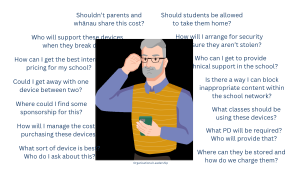
Systems-thinking Leader
A systems-thinking leader’s approach to providing digital devices for learning is more likely to framed by a holistic approach, and take a longer term perspective, being mindful of the range of inter-connected issues at play, considering ideas as illustrated below:
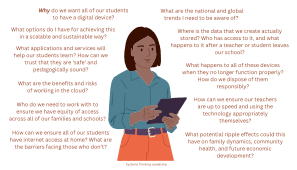
Just as with the school lunch scenario, it is important to understand that it isn’t a case of one perspective over the other. The thoughts of the organisational leader illustrated above are inevitably present in every situation where digital devices for learning are being implemented in schools – these questions need to be answered to ensure the implementation is effective and able to be sustained. But problems can occur if there’s no systems-thinking to balance that. Take, for example, the issue of what happens when students may choose or be encouraged to take their device home to use. Will everyone be able to connect to the internet from home? And if they do, will there be the same or similar protection for privacy and data as there are (or should be!) within the school network environment. And what about families on low incomes – who pays for the data plan to support this learning?
These questions illustrate in a small way how important it is for those with responsibility for the provision of digital devices in schools take an ‘end-to-end’ view of everything in this digital ‘value chain’ – something I attempted to illustrate in the diagram below, developed as part of some work I did for our Ministry of Education during the COVID response:

This image illustrates the connectedness between the provision of internet connectivity on the left through to the teaching and learning activity that takes place at the right. The chain links across the top serve to illustrate that every column is important, and that if one part is missing (i.e. the chain ‘breaks’), the entire process will be impacted. A systems thinker will always be conscious of this complexity, and be working constantly to ensure that any decision made at any point in the process is taking into account the subsequent impact on the elements either side of it (and beyond).
This may seem like an obvious thing to point out – but how often have I seen schools making large investments in digital devices only to find they haven’t considered the extra load these will place on the internal wireless infrastructure, for example, or the need to have systems that recognise student logins to authenticate them in the system – through to the need to up-skill staff on how to integrate these fully into effective teaching and learning practice. Similarly, I’ve seen many examples of well meaning trusts and philanthropic organisations donating devices to schools – but without thought given to these other parts of the digital ecosystem.
In the same way as the provision of school lunches shouldn’t be thought of without taking into account what’s happening for students and home and in the wider community, the same applies to digital devices. While it can be argued that schools can think of themselves as ‘safe havens’ for students and therefore exercise more control over what is and isn’t allowed in the interests of student wellbeing and learning, we cannot ignore the fact that access to digital devices will, for many students, be a ‘normal’ part of how they live outside of school. This reality means that schools must extend their focus beyond the classroom, fostering digital citizenship and responsible device use for students who are already immersed in these technologies at home. At the same time, for those students who do not have access to such resources, the school bears a responsibility to bridge this gap by providing devices and ensuring equity, enabling all students to engage meaningfully in the digital world. A systems-thinking approach that connects school, home, and community contexts is essential to preparing students for the complexities of the digital age.
Call to act
Given the complexity and interdependencies involved in providing digital devices for learning, we must ask ourselves: Are we truly preparing students for a digital future in a way that is equitable, sustainable, and thoughtful? Schools cannot simply focus on what happens within their own walls, nor can they afford to make decisions in isolation. The provision of devices must be part of a broader, integrated strategy that ensures all students—regardless of their home environment—are supported in becoming responsible digital citizens and capable learners, something that the Connected Ako: Digital and Data Strategy endeavours to reflect.
The challenge is for school leaders, teachers, and policymakers to adopt a systems-thinking approach. We must consider the entire digital ecosystem—home, community, infrastructure, and pedagogy—so that no link in the chain is neglected. It’s time to move beyond the narrow view of technology as just another tool, and instead embrace it as an essential, interconnected part of the modern learning experience. The decisions we make today will shape the opportunities and challenges faced by future generations. How are you responding in your context?
Thinking about some places to start if you’re a leader in your local school setting consider some or all of the following:
Create a view of your school’s digital learning ecosystem
- Survey all stakeholders: students, teachers, parents, and support staff
- Assess current infrastructure, including network capacity and IT support
- Identify gaps in digital literacy among staff and students
Work with some expert partners to develop a long-term, digital strategy
- Align with broader educational strategies – and with curriculum goals
- Plan for device lifecycle, including procurement, maintenance, and disposal
- Include professional development for staff at all levels
Focus on working in cross-functional teams
- Form teams with representation from IT, curriculum, finance, and leadership
- Encourage regular collaboration to address interdependent issues
- Assign ‘systems thinkers’ to oversee the interconnectedness of initiatives
Prioritize Equity and Accessibility
- Develop plans to ensure equal access to devices and internet at home
- Consider community partnerships to extend digital access beyond school
- Create support systems for families with limited tech experience
Implement Robust Data Privacy and Security Measures
- Seek advice to help establish clear policies on data collection, usage, and protection
- Provide/outsource training on cybersecurity best practices for all users (including parents and whānau)
- Regularly audit and update security protocols
Ensure digital citizenship is a key focus across the school
- Integrate digital literacy/fluency and responsible use across the curriculum
- Develop programs that involve parents in digital citizenship education
- Ensure all school communications and uses of technology model and reflect responsible tech use
Avoid technology ‘lock-in’ by taking and agile approach
- Establish processes for continuous evaluation and adaptation re purchase and use of technology
- Set up key performance indicators that reflect a systems approach across your digital ecosystem
- Be prepared to pivot strategies based on emerging needs and technologies
Engage in broader educational networks
- Participate in inter-school or nation-wide initiatives to share ideas, resources and learnings
- Collaborate with researchers to stay informed about best practices
- Where possible, contribute to policy discussions at local and national levels
But wait… there’s more!
This is the third of a series of posts I am writing about system-thinking and systems-thinking leadership. My first post outlined some of the background to what systems thinking is about and the second applied the idea of systems thinking to the issue of school lunches. In my next post I will explore the issue of systems-thinking and the issue of virtual learning.

If you’d like to learn more about becoming an effective systems-thinker and system leader, why not enrol to participate in our Refresh, Reconnect, Refocus professional learning programme in 2025?
Following the highly successful programme for principals in 2024, we are offering the programme twice in 2025, one for principals the the second for AP/DPs. Click on the link below to access all the information you require and find links to the online enrolment form.
Here’s what some of the 2024 participants had to say…
“The programme has re-ignited my leadership focus. I feel re-energised, re-focused and ready for action! Not only have I rediscovered my motivation for leadership, but I also gained a support network of like minded people I feel I can call on when needed. I don’t particularly have that in my own context, but I’ve found it here.“
“This programme offers all the good stuff: a retreat but guilt-free workshop, a new network, practical and tested ideas for leadership, future of education insights, 1:1 coaching, ongoing peer support and bite size professional learning invites – all with just the right amount for busy Principals to engage with.”



2 replies on “Systems Thinking: Mobile Devices for Learning”
[…] Derek Wenmouth articles on systems-thinking leadership applied to school lunches & mobile devices. […]
[…] on from my previous posts about Systems Thinking and School lunches, and systems thinking and mobile devices, this post considers systems thinking and virtual learning within the schooling ecosystem in New […]